
Table of contents
Contextual advertising is widely used by website owners across various industries, particularly online retailers. This advertising tool helps businesses achieve a range of marketing objectives and attract potential customers. In this article, we explain what contextual advertising is, explore its different types, and discuss how it works.
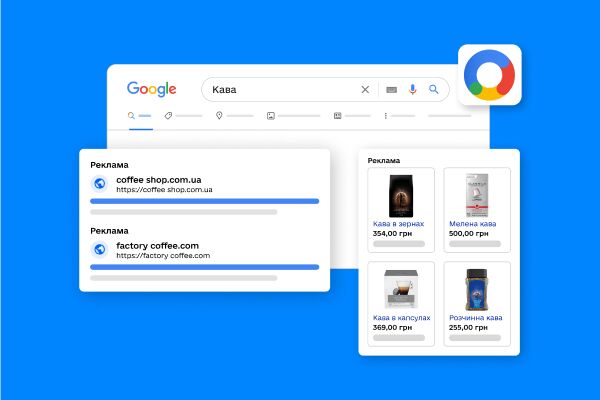
Contextual advertising refers to paid ads displayed to users based on relevant search queries or on web pages whose content matches the ads' context. Contextual ads can appear in search results, on YouTube, or on other websites.
Basics of contextual advertising
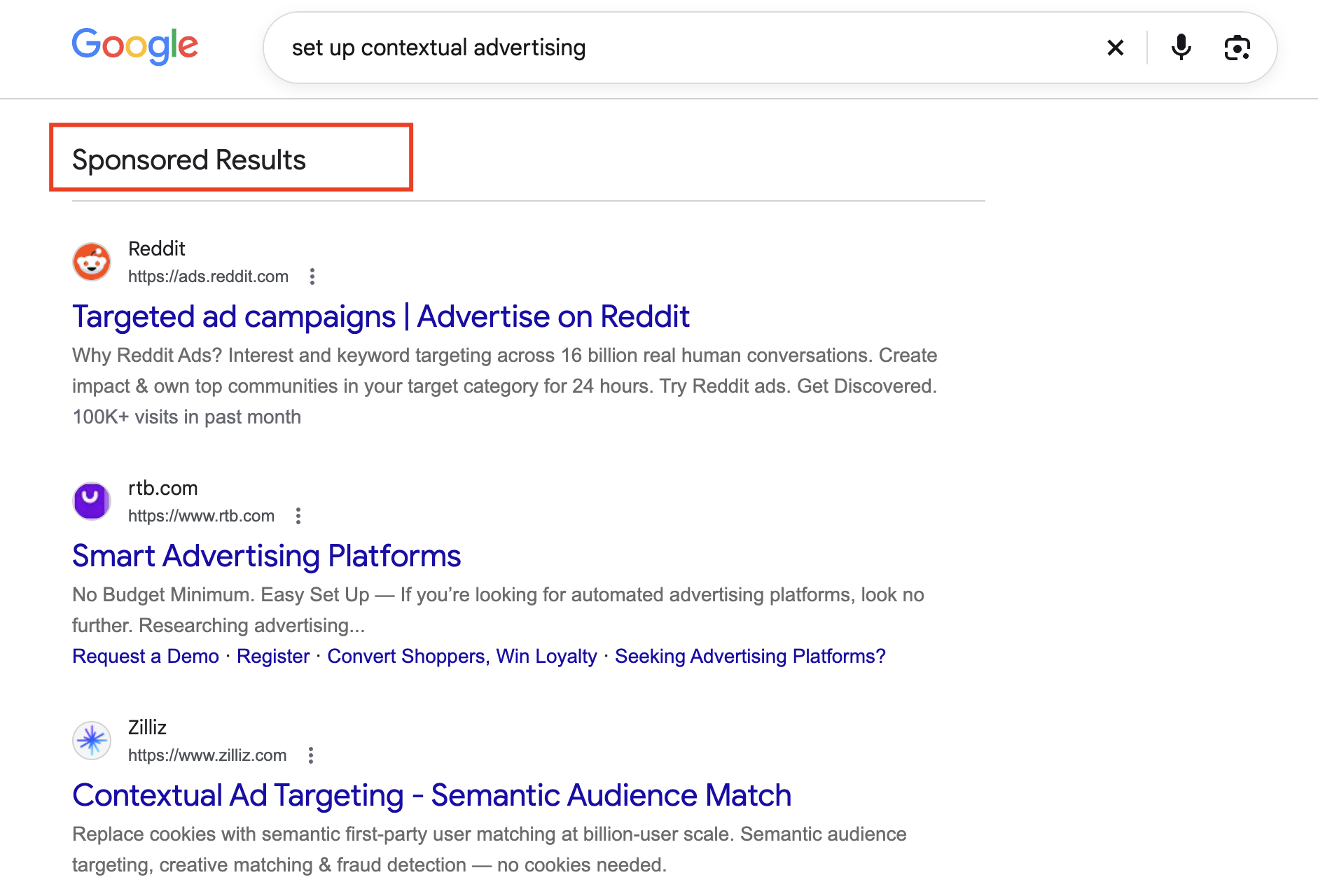
The purpose of contextual advertising is to display ads that are relevant to the content users are searching for or viewing. For example, a user searches for information on how to set up contextual advertising by entering a relevant search query. Among the search results, they will see several paid ads. These ads are placed by advertisers whose businesses are related to the topic.
Contextual advertising is not limited to standard text ads. Ads can include images or appear as videos on YouTube or product listings. The format depends on the platform where the ad is displayed. The most widely used tool for running this type of advertising is Google Ads.
Types of contextual advertising
Search ads
Search ads appear on search engine results pages. They look similar to organic search results but are marked with a special "Sponsored" label. Their main advantage is that they occupy prominent positions on the page. Users often see these ads before organic search results, making them more likely to click on the advertised links. These ads cannot be removed by conventional ad blockers, so users always see them.
Advertisers configure their target audiences and select the search queries for which they want their ads to appear. However, competition in this advertising channel is extremely high. The system evaluates ad quality, relevance, and the amount advertisers are willing to pay. Google places great importance on ad quality, so ads undergo a thorough review process before being displayed.
Banner ads
Banner ads appear across the Google Display Network, which includes advertising placements outside Google Search results. Examples include Gmail and partner websites. The latter are websites that partner with Google and allow banner ads to appear on their pages. Advertisers select and configure their target audiences, while the system determines the specific placements. Banner content depends on the advertiser's objectives. For example, an image may promote discounts or special offers. When users click on a banner, they are directed to the advertiser's website.
The main drawback of banner advertising is its declining effectiveness due to how users perceive online ads. Even bright, eye-catching ads often go unnoticed, a phenomenon known as banner blindness. In addition, some users install ad blockers that may prevent banners from appearing on websites altogether.
Google Shopping
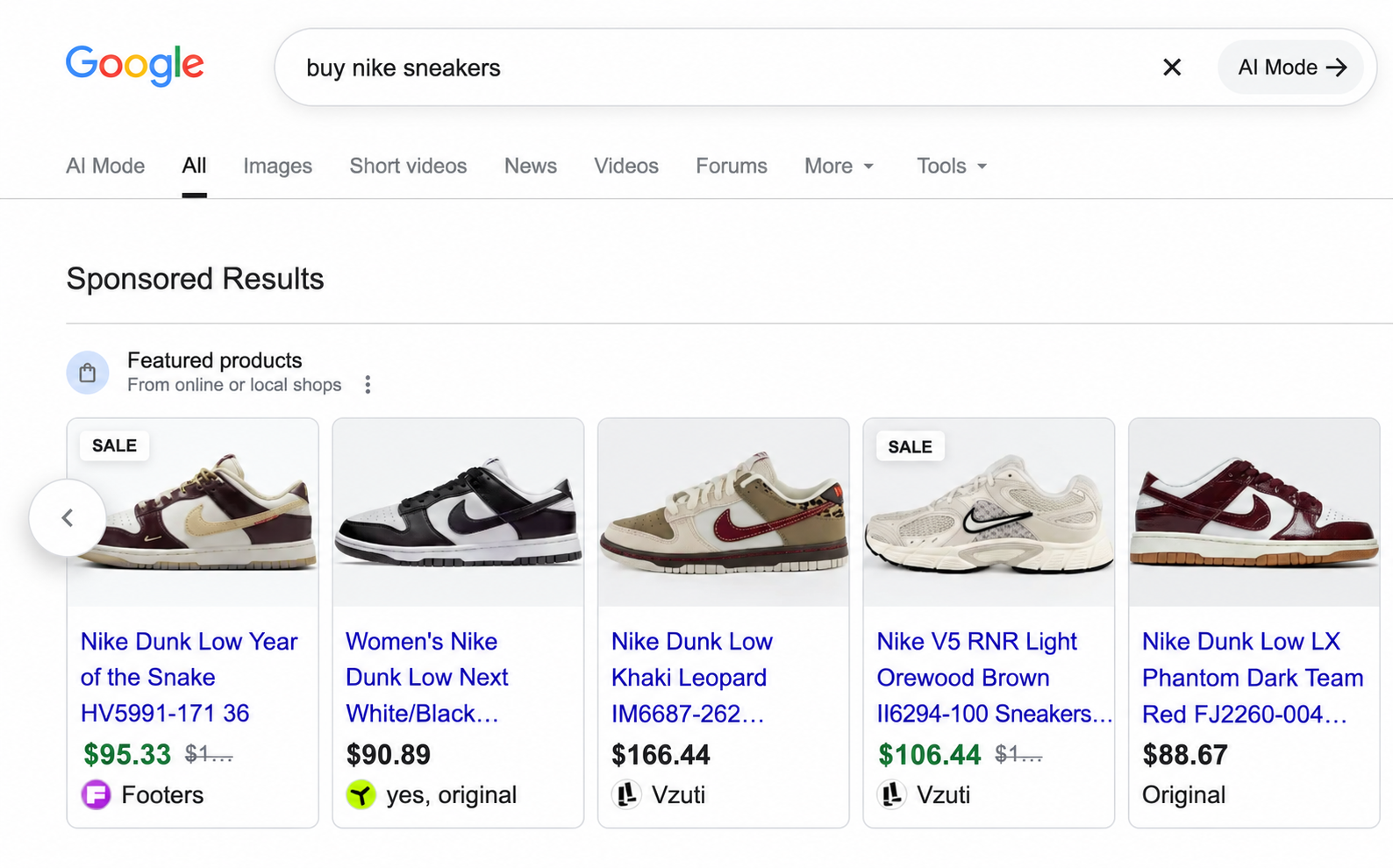
When users enter search queries related to purchasing products, Google may display Google Shopping ads alongside text ads. These ads appear as compact product listings marked with a "Sponsored" label and can be displayed above or alongside search results. Each ad includes a product image, price, name, and seller information. Clicking on a product listing takes users to the online store's website. Google Shopping is particularly popular among retailers because it allows them to reach users who are already interested in making a purchase.
Dynamic remarketing
Dynamic remarketing is a tool for displaying ads to users who have previously visited and interacted with your website. This makes your contextual advertising more personalized. For example, a user visits an online store and browses a tracksuit but leaves without making a purchase. Later, the user visits a website within the Google Display Network, such as a news website. There, they see an ad featuring the tracksuits they previously viewed, which may encourage them to return to the store. This way, dynamic remarketing helps businesses bring customers back and re-engage users who did not complete a purchase for various reasons.
Video ads
Video ads are promotional videos displayed on YouTube before the main video starts. They allow businesses to introduce their brand and products to viewers and promote discounts and special offers. In addition to the video, users see a call-to-action button and a link to the advertiser's website.
Advertising in mobile apps
Contextual banner ads and video ads can also appear in mobile applications. For example, many apps display ads in their free versions, requiring users to watch them to access additional features.
Cost of contextual advertising
Contextual advertising pricing is based on an auction system. Every time an opportunity to display an ad arises, Google Ads determines which ads will appear and in what order. The system considers not only the advertiser's bid but also the quality and relevance of the ad and landing page, the level of competition, search context, and other factors. Therefore, a higher bid alone does not guarantee a better ad position. As a result, the cost of contextual advertising depends on several factors:
-
the level of competition among advertisers;
-
the popularity of the search query;
-
the selected bidding strategy.
The actual cost per click may also be lower than the advertiser's maximum bid.
Google Ads offers different bidding strategies depending on the campaign objective. Advertisers can focus on clicks, impressions, conversions, or video views. With cost-per-click pricing, website owners pay only when users click on their ads. If users simply see a banner or search ad without clicking on it, they are not charged. With impression-based pricing, advertisers pay for every 1,000 viewable impressions, regardless of clicks. Campaigns focused on sales and other desired actions can use automated bidding strategies that optimize bids to generate conversions or achieve a target return on ad spend (ROAS).
Advantages and disadvantages of contextual advertising
Advantages of contextual advertising:
-
delivers immediate results;
-
allows advertisers to display ads for specific search queries;
-
offers a wide range of configuration options;
-
integrates with analytics tools that help evaluate advertising campaign performance.
Disadvantages of contextual advertising:
-
high competition;
-
mistakes in audience selecting, keyword selection, or bidding can lead to wasted advertising budgets;
-
professional assistance may be needed during the initial stages of advertising, resulting in additional costs;
-
ads stop running as soon as the budget is exhausted.
Conclusion
Contextual advertising is an effective marketing tool that works well for almost any niche. It offers flexibility in advertising and helps businesses achieve a wide range of marketing objectives. Contextual advertising is particularly relevant for online store owners looking for a quick way to attract customers.
Start your own online-store
Free test 7 days